Thursday, July 24, 2025

What A Difference A Day Makes -- Google -- July 24, 2025

Locator: 48820GOOG.

Google: raises CAPEX by $10 billion, now up to $85 billion. That's just one year. I can't get my head around that. What does it mean? Question. How much did Warren Buffett spend on acquiring BNSF?

Berkshire Hathaway paid $26.5 billion in cash and stock to acquire the remaining 77.4% of BNSF Railway it didn't already own, according to Wikipedia. The total deal value, including the previously held shares, was approximately $34 billion, according to several sources. This purchase was finalized in early 2010.

At market open:  the Dow was down 300 points. Ouch, but one-third of that is due to IBM plunging after results yesterday. 

Reminder: this is not an investment site. See disclaimer. 

GOOG: up 4%; up $7.20 in pre-market trading. 

From yesterday with an update:

July 24, 2025: Google spooks investors with $85 billion spend rate AI. When earning came out, Google shares surged on how well Google had done. Then, when it became known that Google would spend $85 billion on AI, investors were spooked and GOOG dropped. Many story lines:

  • more evidence that AI is here to stay and only going to grow bigger;
  • a lot of tech companies. have had big runs; investors / traders use these opportunities to take profits;
  • the amount of money needed to succeed in AI is its own moat
  • drilling down on Google suggests it is doing surprisingly well in light of chatbots
  • I can't stress enough how long this AI revolution will continue. Link here. There will be a lot of folks -- in fact "all" folks who click on that link will see how long that post is and will reply: TLDR.

Original Post

Revenue:  $96.43 billion vs $94 billion.

EPS:  $2.31 vs. $2.18 estimate.

Holy mackerel

Cloud revenue above estimates.

Cloud revenue: $13.62 billion vs $13.1 billion.

Now GOOG turns negative.

It will now depend on the conference call. 

AI alive and well. It's not going to go away. More and more AI is coming back to the US.

Blade Runner -- A Re-Look -- July 24, 2025

Locator: 48819AI.

See this link. 

Blade Runner.

In addition to what was posted there, I had some fun with my friend ChatGPT to discuss the metaphorical relationship between the movie Blade Runner and the use of the term "blades" when referring to GPUs, CPUs, NPUs, 

That, of course, led to a desire on my part to watch the movie again. 

Blade Runner came out in 1982. 

All of a sudden "we're there." LOL.

I watched Blade Runner when it first came out -- I don't recall where I was then, either Grand Forks AFB, ND, or Bitburg AB, Germany. I suppose I saw the movie in Germany. Doesn't matter. Just going down memory lane.

Anyway, I don't recall thinking very much about the movie one way or the other. I suppose in the big scheme of things I didn't care for it much.

Last night I watched a documentary of the movie on YouTube. I was intrigued with regard to:

  • what I missed the first time I saw the movie; and,
  • as noted above, "all of a sudden, we're there" -- the need for blade runners. LOL.

I posted all that to post this.

I am really, really impressed with Amazon's business model and marketing.

I am very, very slowly building a personal digital library of movies off the Amazon platform. I can't recommend folks do the same. There is so much content that "buying" digital movies doesn't make sense.

Except when it does.

If you fall into the camp of "buying" digital movies, Amazon does some interesting things:

  • first, Amazon Prime rotates movies for free, but only for short periods of time;
  • then, when Amazon offers those movies for rental or buying, the movies have a "regular price," but every so often some movies "go on sale."
  • the regular price for Blade Runner has historically been too expensive for me to buy.

Last night, for whatever reason Blade Runner was on sale. I don't recall exactly but doing the math, I believe Blade Runner (to buy) was 60% off. 

It's now in my library and I watched the first few minutes. Amazing. I now get it. It only took 43 years. LOL. It's a keeper.

What do others think? I asked my friend: Where does the movie "Blade Runner" rank when it comes to critics, and when it comes to general audiences. 

Answer:

Rotten Tomatoes (Final Cut): 

  • 94% Tomatometer score (as of the Final Cut release) 
  • 89% for the original theatrical version
  • Average rating: ~8.5 / 10

Metacritic:

  • Weighted score between 84–89/100 based on about 11–15 critics, which signifies universal acclaim
  • Film polls & critics’ rankings
  • #3 among Ridley Scott’s films (behind Alien and The Martian)
  • Voted by scientists in The Guardian (2004) and readers of New Scientist (2008) as the #1 sci-fi film of all time
  • Named among the greatest films of the 20th century by critics, programmers, and film archives in multiple polls
Blade Runner is widely regarded as a critical masterpiece and cinematic icon. While its opening reception was mixed due to pacing and tone, it has since become a beloved favorite among audiences and consistently ranks at—or near—the top in sci-fi and film legacy polls.

Blackstone Is Investing $85 Billion In Pennsylvania To Develop AI Energy Infrastructure -- July 24, 2025

Locator: 48818AI.

Search: 

Blackstone is investing over $25 billion in Pennsylvania to develop digital and energy infrastructure, including new data centers and power plants, specifically targeting the growth of AI-related industries.
This investment, led by Blackstone Infrastructure and Blackstone Real Estate, aims to catalyze an additional $60 billion in private investment across the state.
The initiative includes a partnership with QTS, a major data center operator, to develop multiple data center sites in northeastern Pennsylvania.
A joint venture with PPL Corp, a utility company, will focus on developing natural gas power generation to support the energy needs of these data centers.
Key aspects of the investment: Data Center Development: QTS Data Centers, a Blackstone portfolio company, will lead the development of new data center campuses in northeastern Pennsylvania. Power Generation: A joint venture with PPL will focus on building natural gas power plants to provide a reliable energy supply for the data centers.
Strategic Location: The data centers are strategically located near the Marcellus and Utica shale basins, which provides access to natural gas for power generation..

Data Center Developers Increasingly Exploring Off-Grid Options For Power Generation -- RBN Energy -- July 24, 2025

Locator: 48817B.

Tea leaves: agreement between EU and the US on trade will miss the August 1, 2025, deadline. 

United Health plummeting: down 12%in pre-market trading as reports come out that UnitedHealth is under criminal investigation for the way it "managed" Medicaid.

UNP: it is now confirmed that UNP and Nortolk Southern are in advanced conversations. UNP continues to fall; NSC is surging. Breaking on CNBC at 8:12 a.m., July 24, 2025.  In pre-market trading, UNP down 3% and NFS up 3%. Under Hillary/Obama/Biden/Kamala there is not way this merger would be approved; times have changed. Cramer is giddy over this possibility: "the gilded age of rails."

Pennsylvania Data Center: Blackstone, $25 billion.

Columbia University agrees to pay $200 million suit to settle anti-Semitism suit. Link here.

BRK: Bright Rock sells 25,000 shares of BRK. Link here.

*********************************
Back to the Bakken

NOG: 2Q25 operational highlights; only part of what NOG released this morning.

  • completed 22 ground game transactions by adding 4.8 net wells and 2,600 net acres
    • acquisitions across all four of NOG's major basins; cost, $23.8 million now; $7.2 millin incremental
  • wins lawsuit with unnamed ND producer regarding post-production costs previously deducted from revenues
    • company gross: $82 million; nets $49 million after paying $33 million in legal costs

WTI: $65.66.

New wells:

  • Friday, July 25, 2025: 34 for the month, 34 for the quarter, 464 for the year,
    • None.
  • Thursday, July 24, 2025: 34 for the month, 34 for the quarter, 464 for the year
    • 41346, conf, CLR, Syverson 5-12H,
    • 40550, conf, Hunt Oil, Redmond 157-89-19-30H 2,
    • 40181, conf, Hunt Oil, Clearwater, 157-90-23-26H 4,

RBN Energy: data center developers increasingly exploring off-grid options for power generation.

Perhaps the most hyped-up topic in energy these days is how much electricity new data centers will need to keep up with the increased use of artificial intelligence (AI). And that’s prompting some big questions, such as where all the power will come from and how much natural gas demand will rise. But another crucial question may be whether these data centers will pull that power from the grid or generate it themselves on-site. In today’s RBN blog, we’ll discuss the benefits and challenges of each approach.

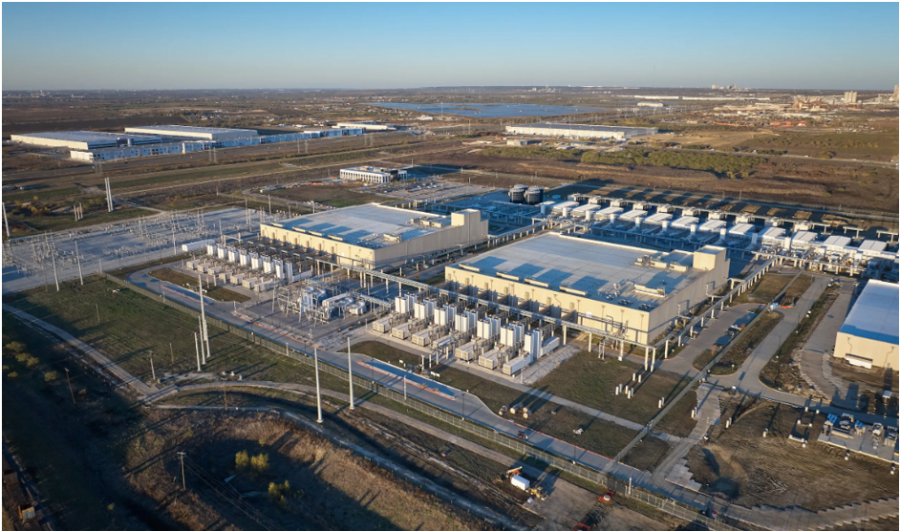
First, let’s offer a bit of background and some data-center basics. As we discussed in Storm Front, large-scale data centers (see photo below) can be home to thousands or even tens of thousands of networked computers that process, store and share data. Data centers — many of them owned and operated by tech giants — are among the most energy-intensive building types, consuming up to 50 times the energy per square foot of a typical commercial office building, with electrical demand at larger facilities ranging from 100 megawatts (MW) to 2,000 MW. (For perspective, as we noted in Just Can’t Get Enough, a city the size of Lubbock, TX, — population 267,000 — only requires about 700 MW.) Demand for data centers has grown exponentially with the expansion of AI tools like ChatGPT and Perplexity, which require far more computational power — and energy — than conventional Google searches.

A Google Data Center in Ellis County, TX. Source: Google

A Google Data Center in Ellis County, TX. Source: Google

As we discussed in We Should Be Friends, renewables like wind and solar often remain an important (if intermittent) part of the power mix for data centers (see Together In Electric Dreams) and nuclear power holds significant long-term potential (along with years-long red tape). But natural gas typically remains Option #1 because, as we noted in Dive In, it is a consistent source of around-the-clock power that can be deployed at scale, usually within a reasonable period of time.

The Bakken Needs More Natural Gas Takeaway -- Which Project Will Advance? RBN Energy -- July 24, 2025

Locator: 48816B.

This article is now available in its entirety. Click on first link blink below, not the "Archived" link. The link will be fully available for a few days and will then disappear.

RBN Energy: the Bakken needs more gas takeaway. Which project will advance? Archived.

The Bakken Shale needs more natural gas takeaway capacity, North Dakota wants to encourage more in-state consumption of Bakken-sourced gas, and two entities — WBI Energy and a combo of Intensity Infrastructure Partners and Rainbow Energy Center — have each proposed similar (but not identical) cross-state pipelines that would help achieve those aims. But, assuming that two new pipelines would be overkill, which of the two proposals is the more likely to advance to a final investment decision (FID), construction and operation? In today’s RBN blog, we discuss the two competitors and the state of North Dakota’s impending decision on which pipeline project to support.

Since the early days of the Shale Era — and the RBN blogosphere — we’ve written frequently about the ongoing need to build more midstream infrastructure to serve Bakken production. Crude oil gathering systems and takeaway pipelines. Crude-by-rail terminals. Gas gathering systems and gas processing plants. Natural gas and NGL pipelines. Even now, with Bakken crude oil production holding steady at close to 1.2 MMb/d through most of the 2020s — far below the play’s 1.5-MMb/d peak six years ago — the push to develop more infrastructure continues. There are three primary drivers: (1) a gas-to-oil ratio (GOR) that has more than doubled since the mid-2010s, (2) steadily increasing production of NGLs (see our recently posted Two Gunslingers for more on that); and (3) gas-demand pull from new power generation, data center and industrial projects.

Today, our focus is on gas pipelines — especially two competing proposals to build large-diameter pipelines that would run from the Bakken to the eastern edge of North Dakota. (More on those in a moment.)

The vast majority of the nearly 3.5 Bcf/d produced in the Bakken heads toward the U.S. Midwest via TC Energy and ONEOK’s jointly owned Northern Border Pipeline (dark-yellow line in Figure 1 below), which transports both Western Canadian and Bakken gas. Much smaller volumes of Bakken gas flow into Pembina Pipeline Corp.’s Alliance Pipeline (light-purple line), whose flows are dominated by gas from Western Canada. Note that Alliance transports “rich” or “wet” gas with significant levels of NGLs that are largely removed at Pembina’s 2.1-Bcf/d Aux Sable gas processing complex just west of Chicago.