Showing posts with label Ducks_California. Show all posts

Wednesday, June 21, 2023

Duck-Curves Are Back -- And WorseThan Ever -- June 21, 2023

Locator: 44991COSTRENEWABLES. 

Duck-curves:

  • ectric rates will only get higher and higher due to this phenomenon.
  • released for publication today by the EIA. Link here. 

ERCOT: easily held yesterday --

  • yesterday was the narrowest to date this summer and will be the last day of concern for this brief warm spell
  • but, wow, it was expensive

Guyana: it's all yours. Thank you, very much for your hospitality.

  • Exxon discusses returning unexplored offshore oil blocks to Guyana -- Oilprice.

WTI: current decline -- about 41% -- "consistent with "some of the largest drops in history" -- Liz Sonders. 

**************************
Back to the Bakken

Indian Hill: a reader sent me this photo last evening. Taken from a KUMV webcam, looking south. Williston, of course, is in the foreground; a flare on Indian Hill is in the background, far left. Will post again, later, as a stand-alone with further notes.

WTI: $71.21.

Thursday, June 22, 2023: 37 for the month; 145 for the quarter, 400 for the year
None.

Wednesday, June 21, 2023: 37 for the month; 145 for the quarter, 400 for the year
39304, conf, CLR, Meadowlark FIU 9-6H1,

RBN Energy: Enbridge poised for success following Mainline tariff settlement as TMX startup looms.

It took a while, but Enbridge and shippers on its 3.2-MMb/d Mainline system have finally reached an agreement in principle on a new tolling agreement that will lower per-barrel rates on the mammoth crude oil pipeline network between Western Canada and the U.S. Midwest — and also help ensure that Enbridge will earn a healthy rate of return on its largest asset.
Assuming the Mainline Tolling Agreement (MTA) is approved by Canadian regulators later this year (and that’s seems to be a safe bet), the new rate structure should also help the Mainline system retain the vast majority of its crude volumes, even as it faces new competition from the Trans Mountain Expansion (TMX) project, which will provide 590 Mb/d of additional pipeline capacity from Edmonton, AB, to the British Columbia (BC) coast starting sometime next year. In today’s RBN blog, we discuss the MTA and what it means for Enbridge, shippers and TMX.

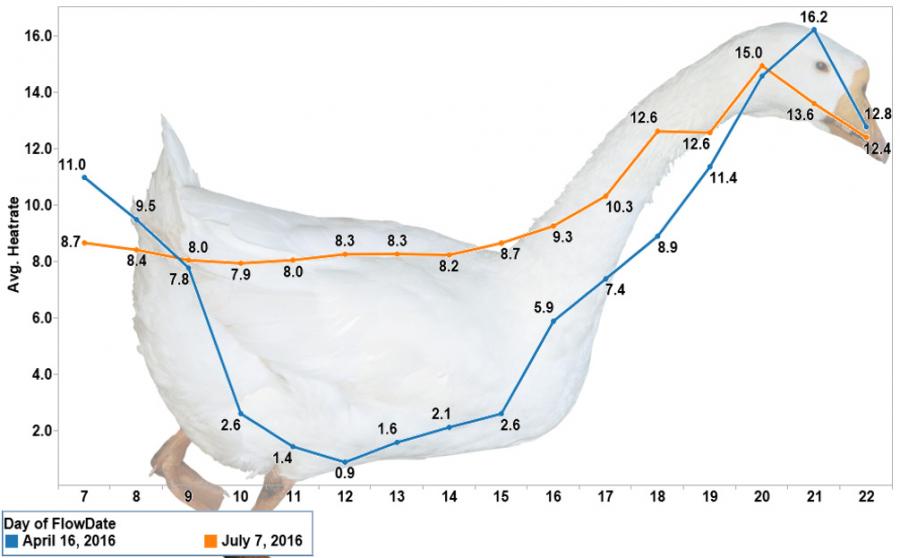
Monday, July 25, 2016

What A California Duck Looks Like -- RBN Energy -- July 25, 2016

From RBN Energy:

This spring, as Californians enjoyed their famously pleasant sunny weather, implied heat rates averaged below 4.0. With heat rates that low, the Pacific Northwest and Desert Southwest reduced the power being sent to California.  During the summer months, however, the load profile is high enough during the middle of the day that both imports and less expensive natural gas units within California are needed to balance the grid.  That means that the impact on gas demand can really swing widely during the day, depending on the season.


There are so many story lines here. I see them as great news for natural gas; the Midcontinent fuel fossil story; and, investors if they pay attention.

I see really, really bad news for utilities if they don't get a handle on this, and hydroelectricity. Nuclear energy in California is already dead. 

Thursday, October 22, 2015

The "Duck Curve" In California -- October 22, 2015

We may have DUCs in North Dakota, but California has a "Duck Curve," as reported by BloombergBusiness.

This is the "Duck Curve":

What's going on?
When the sun starts to set in California, there’s one thing you can count on: thousands of megawatts of natural gas-fired power plants quickly firing up to keep the state lit.
It’s a daily phenomenon that will become more pronounced than ever this winter as California’s ambitious clean energy goals have boosted the state’s use of renewables. The surge in intermittent solar power will test the statewide electricity grid because it exacerbates the need for alternative sources such as gas outside of daylight hours. Regulators have warned it’ll make California more vulnerable to price spikes and power disruptions.
It works like this: As the day begins to wane in the Golden State, generation from solar panels drops off. That occurs just when consumers returning home from work turn on appliances and flip on lights, driving up electricity consumption. Other power supplies are needed to fill the gap and the need is more urgent in winter when days are shorter.

The phenomenon known as the “duck curve” is so named for the resemblance of the demand slope to the profile of a water fowl. The California grid’s need to call on gas-fired plants to balance shifts in demand and supply shows the potential hazards of tying more renewable generation to power networks.
My hunch: we'll see some days when glitches in computer software upgrades lead to some interesting blackouts. Blackouts, not brownouts.