Locator: 48652B.
Harvard: Harvard
University’s Student and Exchange Visitor Program certification is
revoked.
Religious school charters: US Supreme Court rules. Taxpayer money cannot fund religious charter schools.
NY Knicks: gave one away. "Pacers stun Knicks with incredible comeback victory at MSG," Get Up.
US House passes Trump's "tax and spend" bill, or whatever it's called (perhaps, "slash and burn"?). In a late-night vote. Holy mackerel, talk about a close vote, 215 - 214. But it was even closer than that: of three Republican "holdouts," one voted "present" and two others did not vote; had they voted against the bill, the bill would have "died." Two Republicans did vote against the bill (a Pyrrhic win for their constituency -- and they won't get any love from Trump). Tennessee John Republic was perhaps the "key vote," but then again, many, many, many key votes. The New York Times said,
"The legislation would slash taxes, steer more money to the military and
border security, and pay for some of this with cuts to Medicaid, food
assistance, education and clean energy programs, adding significantly to
federal deficits and to the ranks of the uninsured." [It's hard to believe a bill like that would get passed.]
Slash and burn: "Worse than feared." -- Bloomberg
Subsidies for clean
power would end years earlier in a giant tax and spending bill narrowly
passed by the Republican-led House of Representatives early Thursday,
driving down shares of solar companies including Sunrun Inc.
It
now moves to the Senate, where key Republicans have already balked at
some of the House’s plans. Some wanted longer transition times before
the latest House bill cut those even further. (Some senators need more time to sell their solar shares.)
The
House bill is “worse than feared” for clean energy, analysts at
Jeffries said in a research note Thursday. They added, however, that “we
don’t expect this to last into Senate draft.”
Shares of Sunrun fell 44% in early trading Thursday. SolarEdge Technologies Inc. sank 17%.
*******************************
Meanwhile
The Qatar plane deal: all the political hand-wringing is tedious. I have my own thoughts on the "gift": completely unnecessary but for practical reasons, not political reasons. Whatever. But for those complaining politically about the gift, it's always interesting to revisit the past:
Hunter Biden's Business Ventures:
- Burisma Holdings (Ukraine): Hunter Biden served on the board of Burisma, a major Ukrainian gas producer, from 2014 to 2019.
- BHR Partners (China): He co-founded BHR Partners, a Chinese investment firm, in 2013.
- CEFC China Energy: He had a business relationship with CEFC, a Chinese energy company.
- Other Ventures: He also pursued deals in countries like Kazakhstan, Romania, and Russia.
Biggest story right now: Sam Altman. Casually hands $6.4 billion to Jony Ive for project Io and is simultaneously building the largest AI data center in the middle of the west Texas. And OpenAI will remain a non-profit. All this needs to be fact-checked.
*********************************
Back to the Bakken
WTI: $60.35.
New wells:
- Friday, May 23, 2025: 51 for the month, 151 for the quarter, 350 for the year,
- Thursday, May 22, 2025: 51 for the month, 151 for the quarter, 350 for the year,
- 41145, conf, BR, Watchman Peak 5E,
- 40499, conf, Oasis, Lee S 5201 21-8 2B,
RBN Energy: Next Wave uses innovative approach to produce high-quality alkylate.
It’s been about a year and a half since Next Wave Energy Partners opened
its Project Traveler facility, a milestone in the energy industry.
Overall, Project Traveler has exceeded production expectations and
proven the innovative approach of combining ethylene and isobutane to
produce high-quality alkylate. In today’s RBN blog, we’ll look at what’s
been accomplished so far and dive into what’s ahead for Next Wave.
We first mentioned Next Wave’s ethylene-to-alkylate project (see photo below) back in 2020 in Drive My Car. (We also discussed it in Keeps Getting Better, Part 1 and Part 2, and, most recently, in Traveler.)
It is a unique, standalone alkylation facility, with no crude oil
processing involved. Instead, the feedstock is ethylene, which is
converted to butylene in a dimerization unit and then further converted
to alkylate in a conventional sulfuric acid (H2SO4) alkylation unit. (More on this below.)
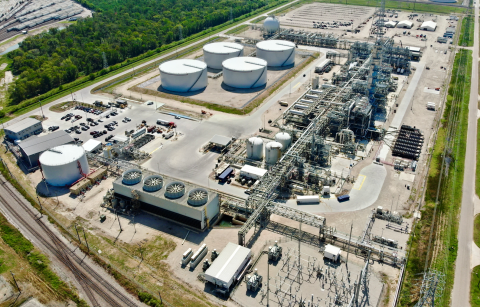
Figure 1. Next Wave’s Project Traveler in Pasadena, TX. Source: Next Wave
As a brief refresher, gasoline is a blend of many hydrocarbon
components (including alkylate) that, in combination, meet certain
specifications. It’s up to refineries and gasoline blenders to come up
with gasoline recipes that satisfy the requirements of specifications
like Reid Vapor Pressure (RVP), octane and sulfur content. As you’re
reminded with each visit to the pump, there are at least three
octane-based grades of gasoline; the standard ones in most of the
country are 87 (regular), 91 (midgrade) and 93 (premium). The octane
number — the closer to 100 the better — indicates how much a fuel can be
compressed before it self-ignites, which causes “knocking” in your
engine, while RVP measures how easily a fuel vaporizes — typically the
lower the better for emissions reasons.
Blendstocks that are high in octane and low in RVP, benzene and
sulfur content are the most desirable for refineries and gasoline
blenders. Alkylate, typically produced at crude oil refineries with
fluid catalytic cracking units (FCCs), is perhaps the major gasoline
component with the best combination of these four qualities: octane of
90 to 96, RVP of 3 to 6 pounds per square inch at atmospheric pressure
(psia), zero benzene content, and sulfur content of only 5 to 15 parts
per million (ppm).
While
overall gasoline demand in the U.S. has remained relatively flat over
the past several years, demand for higher-octane grades (midgrade and
premium) has grown. A major reason for this is the push to increase the
fuel efficiency of internal-combustion-engine (ICE) vehicles using
higher compression and turbocharged engines, which require higher-octane
fuels. Another factor incentivizing the production of high-octane
components is the “lightening” of U.S. refiners’ crude slates due to the
Shale Boom. When higher-API shale oil barrels are refined, they produce
more naphtha, which has a low octane number and therefore needs to be
“blended up” with high-octane components like alkylate in the gasoline
pool. An important fact to note is that existing refineries can’t do
much to ramp up their alkylate production (typically representing about
15% of the total gasoline pool) because they already run full in almost
all circumstances.