Locator: 51057AAPL.
News:

Ticker:

AAPL? My entry point? $184.
Locator: 51057AAPL.
News:

Locator: 51056SPACE.

SpaceX has spent years trying to reinvent rockets. Now it's coming after midstream.
The aerospace giant plans to begin construction next month on an eight-mile natural gas pipeline dubbed "Starpipe" that will feed its Starbase launch facility in South Texas, according to filings reviewed by Reuters. The pipeline is expected to be operational by January and marks the latest step in Elon Musk's increasingly ambitious plan to control nearly every link in the Starship supply chain.
Starship burns liquid methane—a lot of it. Each launch consumes roughly 630,000 gallons, and today that fuel arrives by hundreds of tanker trucks in a logistical headache that's fine for a dozen launches but completely incompatible with Musk's vision of eventually launching hundreds, or even thousands, of Starships every year.
Pipelines solve that problem.
Engineering plans indicate that SpaceX also wants to build a liquefaction plant at Starbase to convert pipeline gas into liquid methane on-site. Company President Gwynne Shotwell recently confirmed SpaceX is also evaluating drilling its own natural gas in Texas, extending the company's vertical integration strategy from rockets and satellites to the energy that powers them.
Meanwhile in the Mideast: another entity -- Iran’s Persian Gulf Strait Authority (PGSA) has issued a stark warning to international maritime traffic, stating that any vessels transiting the Strait of Hormuz outside of its officially designated routes will no longer be guaranteed safe passage. Iran fired on a non-oil cargo tanker transiting the strait in the last 24 - 36 hours.
*******************************
Back to the Bakken
Query:
Gemini: there are some locations in the Dakotas that have "ELLS" as part of their name, such as Ellsworth AFB. Who was Ellsworth?
Reply:

Trivia: my father was born near and grew up near Ellsworth AFB. His coming of age was spent in the US Navy during WWII after which he moved back to the Dakotas. We visited the Ellsworth AFB area almost every summer when I was growing up. We camped in the Black Hills for a week or so almost every summer.
WTI: $71.54.
Active rigs: 26.
Seven new permits, #43065 - #43071 --
One producing well (a DUC) reported as completed:
Locator: 51054COVID.
From NBC:


From NPR:

Query:
My hunch: the vaccine in the short term prevented a lot of illnesses and helped stop the initial outbreak. The original pandemic was likely shortened by several months, maybe years due to high Covid vaccination rate.
Reply:


Locator: 51053FERRARI.
Most surprising headline:

This really begs the question! The marketing chief was the scapegoat for an amazingly bad decision by the CEO who had the support of the board of directors?


Locator: 51052MARKET.
Most surprising headline:
This really begs the question! The marketing chief was the scapegoat for an amazingly bad decision by the CEO who had the support of the board of directors? See this post.
Memory shortage: the current DRAM and NAND flash shortage is overwhelmingly driven by large data centers (LDCs). The rapid build-out of artificial intelligence infrastructure and cloud computing has led to a structural reallocation of manufacturing capacity, causing severe supply constraints and surging prices for consumer devices.
Anticipation:

Apple: raises prices on many items -- significantly. AAPL down $12; down 4%.

MU: right now, up 200 points.
CAT: accounts for 200 points of the jump in the Dow in early trading.
Wash: GDP up more than expected; inflation up more than expected.
Locator: 51051B.
WTI: $69.64
New wells reporting:
RBN Energy: what's behind the soaring price of the D4 renewable identification number. Link here. Archived.
The price of the D4 Renewable Identification Number (RIN) has increased by 130% so far in 2026. The jump in the price of this RIN — a federal environmental credit that functions as a subsidy for the production of diesel made from soybean oil and other renewable feedstocks, but also as a tax on the production of conventional diesel made from crude oil — has been accompanied by a 60% increase in the price of soybean oil. Today’s RBN blog gives a high-level view of what is behind this year’s bull run in the D4 RIN and related commodities.
In 2026 and 2027, U.S. refiners and importers are obligated to supply nearly 6 billion gallons per year of diesel made from feedstocks like soybean oil to the U.S. market. That’s 10% of all diesel to be consumed in the U.S. This obligation stems from the Renewable Fuel Standard (RFS), which we’ve written about for years, going all the way back to 2012’s A Market of Contradictions. The RFS is administered by the U.S. Environmental Protection Agency (EPA) and includes mandates for minimum annual production volumes of four different categories of renewable fuels: Cellulosic Biofuel, Bio-Based Diesel, Advanced Biofuel and Total Renewable Fuel.
Through the credit trading system created with the RFS, refiners who don’t have the capability to produce diesel from renewable feedstocks can effectively borrow that capability from others who do. You can do that by buying D4 RINs, reporting that transaction to the government, then “retiring” the RINs (see dashed red box in Figure 1 below). By paying for and retiring those RINs, you have effectively rented the capacity to produce your government-mandated quota of renewable diesel, while some other biofuel producer has fulfilled your obligation to supply it to the U.S. market. Many refiners produce renewable diesel — the common name for the product made in petroleum refineries — at facilities modified to convert soybean oil into diesel. They include Calumet Inc., Chevron, HollyFrontier, Marathon Petroleum, Par Pacific Holdings, PBF Energy, Phillips 66 and Valero.
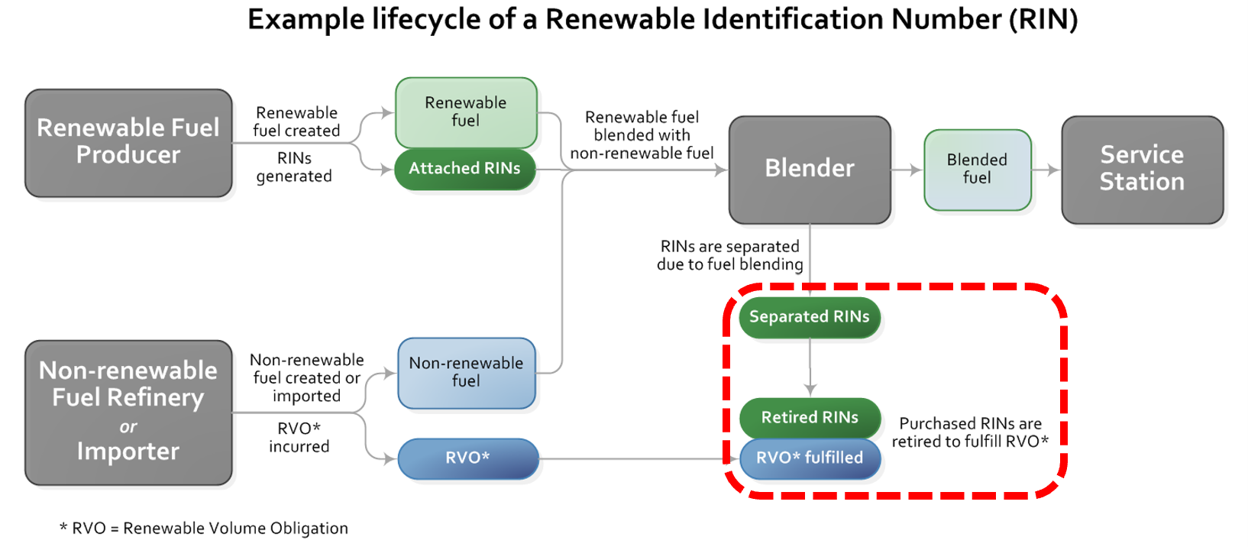
Figure 1. Example Lifecycle of a Renewable Identification Number. Source: EPA

