Idle rambling/chatter in a reply to a reader who noted that US intelligence suggests that current Wuhan flu pandemic probably goes as far back as September/October, 2019.
"Beijing, we have a problem": Truly, truly interesting. That brings us well back to October, possibly September, 2019, when the Chinese noted they had a problem. Compared to swine flu, this coronavirus certainly has staying power, as a pandemic.
Swine flu / influenza and corona virus are in two completely different groups of RNA viruses.
I have no idea if the Baltimore classification is still used, but if so, there are seven "Baltimore classes" of virus based on their genetic constitution.
By the way, corona virus has an interesting connection to North Dakota:
Coronaviruses were first discovered in the 1930s when an acute respiratory infection of domesticated chickens was shown to be caused by infectious bronchitis virus (IBV). Arthur Schalk and M. C. Hawn described in 1931 a new respiratory infection of chickens in North Dakota.
I'm hoping that, like Sputnik and the Apollo space missions, the current pandemic encourages a lot of young Americans to "go into" biology, chemistry, medicine.
****************************************** The Apple Page
AirPods: "Growth Was Almost Like Wildfire": link here.
The epiphany:
We had this incredible wireless product, the iPhone. And yet, what began to feel odd is when you saw somebody using wired headphones. Right then you thought, why would you attach the wire?
Apple recently reported
its financial results for the second fiscal quarter of 2020, and Apple
CEO Tim Cook proudly announced that a quarterly record for wearables had
been set. In the first fiscal quarter of 2020, Cook had also announced
that Apple's wearables category had set a new all-time revenue record.
In addition, it was mentioned that Apple's wearables business is now the
size of a Fortune 150 company.
**********************************
Pigs In Space
Sophia took this in good spirits. She knew that Corky was just goofing around and that she wouldn't really be shot out of the cannon. Btu Corky sure is a good sport.
Tell me again that Prince MbS's plan to flood the earth with oil was well thought out. LOL.
Re-posting. This might be the biggest story of the week and it's only Sunday.
Sour grapes: Saudi Aramco is seeking to review price of SABIC deal. Wow. Are you kidding? My hunch: the fix is already in. At Reuters:
Saudi Aramco is looking to restructure its deal to acquire a controlling
stake in petrochemicals maker SABIC after a more than 40% drop in
SABIC’s value following a slump in oil prices in coronavirus pandemic.
transaction priced at 123 riyals; $70 billion share of SABIC; represented 70% of SABIC;
today: shares trading at 70 riyals; entire SABIC now valued at less than $60 billion; Aramco's stake now worth about $40 billion
ouch
**********************************
The Geography Page
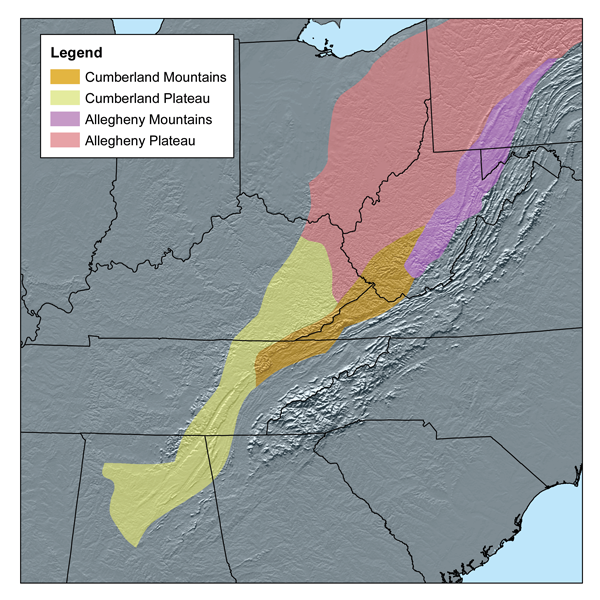
Subdivisions Of The Southern Appalachian Plateau
To help me understand the history of the Scotch-Irish / Ulster-Scots in America. Very, very broad-brushed; very simplistic; and probably filled with errors, but it gets me oriented to a part of the United States I don't know well.
Allegheny Mountains (southwest PA, and eastern third of WV)
Allegheny Plateau (eastern half of OH; western two-thirds of WV)
Cumberland
Cumberland Mountains (southeast corner of WV; southwest border of Kentucky/Virginia)
Cumberland Plateau (eastern fifth of Kentucky; eastern sixth of Tennessee; into Mississippi
Latitudes:
Allegheny Mountains, maybe
from Pittsburgh, PA, to Charleston, WV; maybe 200 miles as the crow flies?
Cumberland Mountains, maybe
from Charleston, WV, to Knoxville, TN; maybe another 200 miles as the crow flies?
Once having crossed the mountains:
the Allegheny Plateau, in a northeast to southwest orientation, extends from western PA and western WV to eastern half of Ohio; a very little bit of northeastern Kentucky;
the Cumberland Plateau, in the same northeast to southwest orientation, from a small eastern fifth of Kentucky, a small eastern sixth of Tennessee, and down into north-central Mississippi, skirting a bit of the northwestern corner of Alabama
Colonists, in this area:
the northern route took them into Ohio
the southern route took them into Tennessee
Is the east-west distance of the Allegheny in the north and the Cumberland in the south only 20 - 40 miles at most, again as the crow flies?
I have two wonderful memories of this area but at the time did not realize the significance of this incredibly beautiful area.
First trip through this area, Nashville, TN, to Westfield, NJ, early summer, 1971, mostly through the night; leaving Nashville, TN, early afternoon, and arriving Westfield, NJ, very early the next morning. The more I think about that trip, the more amazing it was.
Second trip through this area, Langley AFB, VA, to Wright-Patterson AFB, Dayton, OH, summer, 2001, if I recall correctly. A most spectacular drive through the mountains of West Virginia. Based on my notes above, they would have been the Allegheny Mountains, and maybe even the northeastern tip of the Cumberland Mountains: I-64 to Charleston, and then US Highway 35 through western VW and southeastern Ohio up to Dayton, OH. Early western settlements at this site.
The Great Shenandoah Valley linked the northern and southern portions
of the area sometimes called the “Old West.” In the North, this inland
region extended across Pennsylvania and New York as far as Lake
Champlain. In the South, the “Fall Line” formed the separation between
the Tidewater settlements and the Piedmont which sloped gradually upward
towards the Appalachian Mountains. Through the Valley, the Germans and
the Scots-Irish migrated in unending procession.
Southern settlers from Maryland and Virginia moved along the
Potomac River north and west to Fort Cumberland and then to Pittsburgh
and Ohio country. Alternately, some went through mountain passes into
Kentucky and Tennessee. Still others continued south and west into
Georgia, Alabama, Mississippi, and Florida.
That's enough now to get me oriented and get me started.
Re-reading: The Scotch Irish: A Social History, James G. Leyburn, c. 1962.
Sour grapes: Saudi Aramco is seeking to review price of SABIC deal. Wow. Are you kidding? My hunch: the fix is already in. At Reuters:
Saudi Aramco is looking to restructure its deal to acquire a controlling
stake in petrochemicals maker SABIC after a more than 40% drop in
SABIC’s value following a slump in oil prices in coronavirus pandemic.
transaction priced at 123 riyals; $70 billion share of SABIC; represented 70% of SABIC;
today: shares trading at 70 riyals; entire SABIC now valued at less than $60 billion; Aramco's stake now worth about $40 billion
ouch
Iraq unsettled: nominee for finance minister derailed; interim named.
Negative rates: Swiss National Bank forced to lower overnight lending rate to minus 0.75%; analysts say the negative interest was necessary to avert major damage to Switzerland; the SNB was also stepping up foreign currency purchases to dampen the rise of the franc; comment: Saudi princes flocking to Switzerland?
Restrictions on public life imposed by the
Swiss government to try to curb the spread of COVID-19 were limiting
Swiss economic activity to 70-80% of normal levels at an economic cost
of 11-17 billion francs per month.
Asked by Tribune de Geneve if
Swiss rates could go even more negative, he said: “We still have room to
manoeuvre if necessary, but today we are focusing on interventions on
the foreign exchange market to limit the pressure on the franc.”
He said the SNB had no plans at this stage to increase its gold holdings of 1,040 tonnes.
Subways, trains, buses: empty around the world; not sure if riders will return -- Washington Post;
Minnesota, coronavirus update: 25 of the 26 new deaths occurred among residents of long-term care facilities; LTC facility deaths, at 434, account for more than 81% of all corona-virus-associated deaths. Of the 26 new decedents: ten were in their 90s, nine in their 80s, five in their 70s, and two in their 60s. The median age of all decedents remains at 83 years of age. Worthington pork processing plant: