Locator: 51079B.
T-Mobile: canceling legacy plans; transitioning customers to their new plans. Link here.
Trains > Trucking: link here.

Ticker: CSX hits all-time high --

*************************************
Back to the Bakken
WTI: $69.98
New wells reporting:
- Wednesday, July 1, 2026: 1 for the month, 1 for the quarter, 354 for the year,
- 41537, conf, Devon Energy, Stallion 33-28 5H,
- Tuesday, June 30, 2026: 40 for the month, 196 for the quarter, 353 for the year,
- 42447, conf, Petro-Hunt, Hoiby 158-94-10B-15-1HS,
- 41191, conf, Hess, BL-Mortenson-156-95-2234H-3,
RBN Energy: common-carrier rules shape liquids pipelines, but open seasons remain crucial. Link here. Archived.
The pipeline open season is one of the most important aspects of the midstream world, regardless of whether the pipeline in question is moving natural gas or a liquid. But liquids pipelines operate quite differently from their gas pipeline cousins. They are regulated under a different law and face broader competition, giving them more flexibility in some respects but less in others. As a result, people who know gas pipelines well are often hopelessly confused when they first start dealing with liquids pipelines. In today's RBN blog, we’ll walk through how open seasons work for liquids pipelines and the role they play.
This is our third blog on open seasons. As a refresher, an open season is a competitive process in which any qualified shipper can bid for firm pipeline capacity. In Part 1, we explained the practice of conducting open seasons for capacity in energy pipelines, and gave a high-level explanation of the differences between natural gas pipelines and liquids pipelines, even though they’re both regulated by the Federal Energy Regulatory Commission (FERC). In Part 2, we did a deep dive into interstate natural gas transmission and storage facilities, including how they connect to precedent agreements and certificate proceedings.
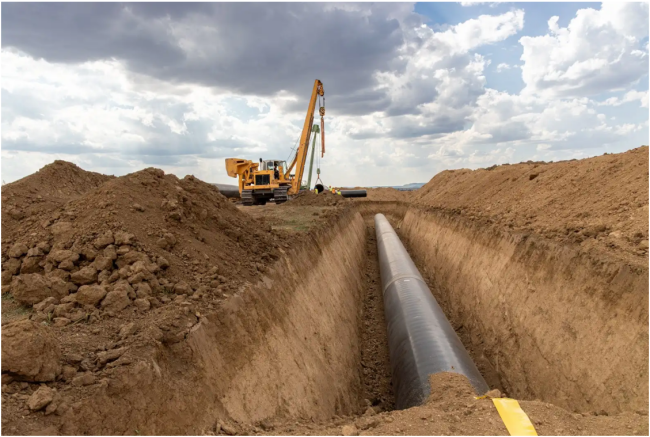
A Pipeline Project Under Construction. Source: Adobe Stock
