Locator: 50862B.
From yesterday, May 26, 2026, four new permits:
- Operator: Phoenix Operating
- Field: Ranch Creek (McKenzie County)
- Comments:
- Phoenix Operating. has permits for four Morris wells, SESW 11-146-99, to be sited 940 FSL and 2224 / 2314 FWL.
Today:
WTI: $89.48
New wells reporting:
- Thursday, May 28, 2026: 55 for the month, 155 for the quarter, 312 for the year,
- 41859, conf, Devon Energy, Finn 13-25F 1H,
- 41031, conf, Hess, BW-Wilson-149-99-3625H-2,
- Wednesday, May 27, 2026: 53 for the month, 153 for the quarter, 310 for the year,
- 41753, conf, Stout 1301-4BH,
RBN Energy: the UAE's OPEC exit has ramifications for global oil market, US producers. Link here. Archived here.
The global oil market has been especially volatile this year, mostly due to the conflict in the Middle East and the effective closure of the Strait of Hormuz since the beginning of March. The United Arab Emirates’ (UAE) April 28 announcement that it would cease its OPEC membership, effective May 1, provided the oil market with another jolt, and comes with a number of possible short- and long-term impacts. In today’s RBN blog, we dig into why the UAE chose this path, explain how OPEC and other organizations have influenced oil production and prices over the years, and examine the potential implications for the global market and U.S. producers.
According to the UAE’s Minister of Energy, Suhail Al Mazrouei, the decision to exit OPEC reflects a “policy-driven evolution aligned with long-term market fundamentals.” In this regard, and in the context of how the previous oil cartel evolved (more on that later), the UAE’s departure from OPEC is less surprising than it may at first appear and could be seen as evolutionary rather than revolutionary. The UAE (blue-shaded country in Figure 1 below) has both the desire and the capacity to increase oil production while the OPEC cartel’s raison d’etre broadly favors production restraint and price support. And nations tend to act out of permanent self-interest while alliances and adversaries are temporary.
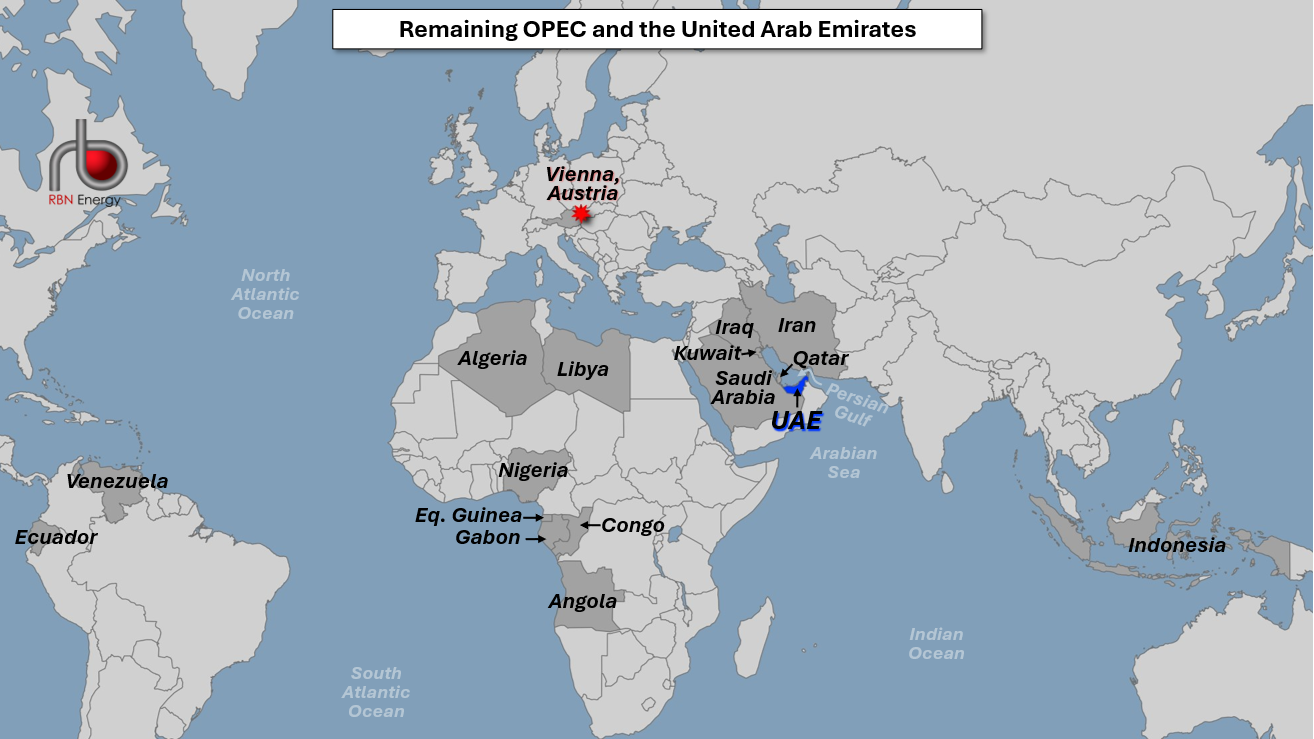
Figure 1. Remaining OPEC Members and the United Arab Emirates. Source: RBN
