Locator: 49226EISEN.
Sarah has changed her hair slightly; her countenance is noticeably changed.
Stagflation? Sara Eisen -- no, not even close.

Reiterates this morning's data:
- GDP, 2Q25 real GDP: 3.8% vs 3.3%;
- PCE price index: 2.1%
- Core PCE: 2.6%
- unemployment rate: 4.3%
- initial jobless claims:218K vs 235K estimate
- weekly contin: -2,000 to 1.9 million
- August durable goods: 2.9% vs -0.5%.
US existing home sales: great story -- much better than expected
- down 0.2% m/m but incredibly less than the 1.5% decline expected
- big story now: inventory of available houses dropping -- and dropping fast
***********************
RBN Energy
RBN Energy: once stuck in the doldrums, weather derivatives may have the wind at their back.
The popularity of weather derivatives has ebbed and flowed since their introduction in the late 1990s but trading activity has rebounded in recent years as the trading community has increasingly begun to reassess the need to hedge weather-related risks — everything from high temperatures and rainfall levels to power prices and cooling demand. In today’s RBN blog, we examine the role of weather derivatives, how they are used to hedge risk, and why they may be becoming increasingly important to the energy industry.
Many of you are probably familiar with Jim McIngvale (see photo below), the Houston-area celebrity known as “Mattress Mack” and the owner of Gallery Furniture. He gained national attention back in 2017 when he opened his stores to those affected by Hurricane Harvey, but he’s also attracted a lot of notoriety for his big-dollar bets on college and professional sports. We assume that Mattress Mack enjoys a good wager and the publicity that comes with it, but there’s often a bottom-line strategy behind his bets. In perhaps the most newsworthy example, his stores ran a promotion back in 2022 that said if you bought at least $3,000 in furniture, you’d get it for free if the Houston Astros won the World Series. That potentially expensive proposition became a reality when the Astros beat the Philadelphia Phillies in six games, but Mattress Mack was covered because the downside risk of that promotion (giving away a lot of free furniture) was hedged by his bet on the Astros to win the Series. In the end, he won a reported $75 million in bets (on $10 million wagered), earned himself and his store a load of free publicity, and more than made up for all the free furniture he ended up giving away.
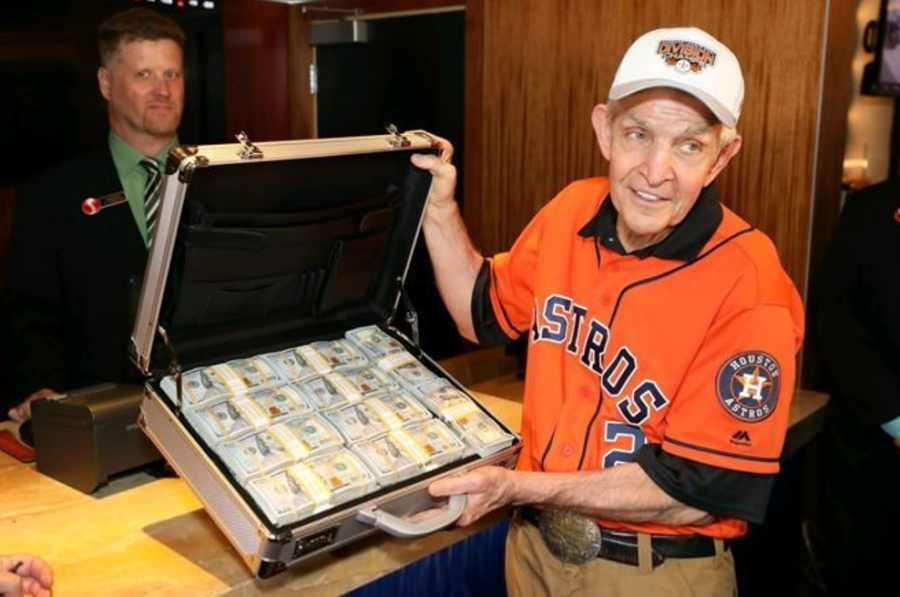
Houston’s Jim McIngvale, Better Known as “Mattress Mack.”
Weather derivatives, which have been around for about 30 years, work in much the same way as the example above, so let’s start with some basics. Weather derivatives are financial contracts that are linked to one or more specific, measurable variables, such as average temperatures, wind speeds and cumulative rainfall. They are financially settled using data from the National Weather Service (NWS) or other trusted, third-party providers. Perhaps most importantly, there is no physical damage required to trigger a payout (unlike insurance); the only thing that matters is whether the specific conditions of a derivative have been met. For example, a business impacted by the aforementioned Hurricane Harvey would have had to document any actual damage and file a claim for its insurance to pay out but could have quickly collected on any derivatives tied to above-average rainfall for that month. (Harvey dropped 40-50 inches of rain on Houston in August 2017, well above the monthly average of 5.4 inches.)
