Showing posts with label NG_ND. Show all posts

Sunday, May 18, 2025

Best Blog Of The Day -- Tea Leaves — Big Announcements With Regard To Large Data Centers About To Be Announced For North Dakota — May 18, 2025

Locator: 48647B.

Don’t forget that Doug Burgum, former North Dakota governor and one of the nation’s richest politicians, is in Trump’s inner circle. Williston is showing success with data centers; Fargo has to be salivating.

Fargo: a most interesting city in the US. IYKYK. The maps will eventually make sense:
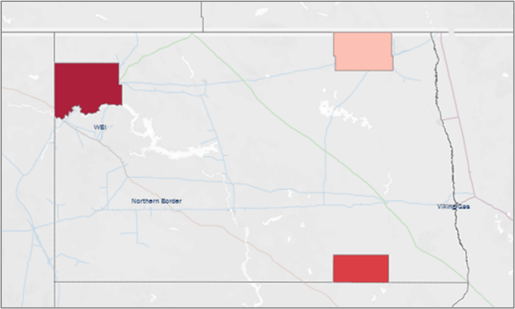
tdn 5.15 2-1tdn5.15

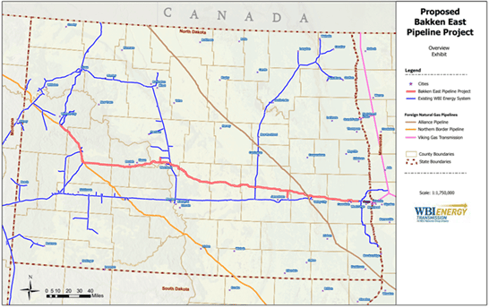
A reader sent me a link regarding new natural gas pipelines in North Dakota, which we discussed some time ago. I'll provide the links down below.

Meanwhile, for folks following the AI industry and large data centers, I highly recommend using AI for tailored answers to one's specific questions.

Two specific questions I asked ChatGPT today:

  • what are the largest AI data centers in the US; and
  • what is meant by the different tiers (Tiers I through V).

With regard to the ten largest data centers in the US, I went down that rabbit hole. The DFW area (or as ChatGPT calls is, "Dallas") is #2 following "AI Alley" in Virginia.

"AI Alley" in Virginia refers to the Ashburn area, specifically in Loudoun and Fairfax counties, where a large concentration of data centers is located. This area, also known as "Data Center Alley" or the "Dulles Technology Corridor," is a major hub for internet traffic and is a critical location for the development and deployment of AI technologies.

One search led to this answer regarding the ten largest data centers in the US:

  • Reno, NV, listed first
  • Ashburn, VA, see above
  • Secaucus, NJ
  • Los Angeles
  • Chicago
  • Atlanta, GA
  • Miami, FL
  • Quincy, WA
  • Bluffdale, UT
  • Miami, FL (second time on this list

A much better question to ask ChatGPT: what are the metro areas in the US with the largest number of large data centers? The answer:

  • Northern Virginia; "Data Center Alley"; "AI Alley"
  • DFW, Texas
  • Silicon Valley, northern California, across the bay from Oakland and south of San Francisco;
  • Chicago
  • Phoenix, Arizona
  • Atlanta, Georgia
  • Seattle/Quincy, Washington
  • NY/NJ metro (Secaucus, Newark)

Next question to ask: is Fargo, ND going to be the home of large data centers, which, of course, pertains to the new natural gas pipelines being proposed in North Dakota, from the Bakken to Fargo.

The answer begins:

Fargo, D, is emerging as a potential hub for large-scale data center development, driven by its strategic location, robust infrastructure, and supportive policies. 

Then this: two unnamed companies, each with trillion-dollar market capitalizations, are exploring the development of AI-focused data centers in North Dakota. These projects could start with capacities between 500MW and 1GW, potentially scaling up to 5 - 10GW facilities.

From the East Daley link below:

One driver behind these projects could be data centers. The Energy Information Administration (EIA) reported last year that North Dakota had the fastest relative growth in commercial electricity generation from 2019 to 2023, largely due to data center buildouts. 

In the Data Center Demand Monitor, East Daley is only tracking four announced data center projects in North Dakota with estimated demand of ~82 MMcf/d (see map from the  Data Center dashboard). But developers will often approach multiple potential partners about large projects prior to their announcement, which may have spurred these open seasons. 

Fargo, in addition:

  • intersection of two major US interstate highways;
  • two major universities in the immediate area (yes, Grand Forks is in the immediate area)
  • Grand Forks AFB, ND -- huge (google drones "Grand Forks AFB" -- see below)
  • aeronautical school at UND, Grand Forks, world-renown
  • excess energy -- natural gas from the Bakken
  • huge, educated work force, scalable
  • already established as a city that could become the AI center of the midwest
  • least expensive electricity in the entire United States

Now, the two links to the new natural gas pipelines being proposed in North Dakota:

North Dakota data centers: link here.

  • Williston, ND: 8
  • Fargo, ND: 4
  • Grand Forks: 2
  • Bismarck: 1
  • Ellendale: 1

South Dakota: 4

  • all four in Sioux Falls, SD

*********************
Drones and Grand Forks AFB, ND 

From AI:

  • Grand Forks Air Force Base (AFB) in North Dakota utilizes drones for various missions, including intelligence, surveillance, and reconnaissance (ISR). 
  • They operate RQ-4 Global Hawk remotely piloted aircraft (RPAs) for these ISR roles. 
  • The base also has a small UAS (sUAS) program for threat surveillance and deterrence, deploying small commercial drones. 
  • Specifics of Drone Operations at Grand Forks AFB: RQ-4 Global Hawk: 
  • The primary drone operated by Grand Forks AFB is the RQ-4 Global Hawk, a high-altitude, long-endurance ISR aircraft. 
  • 319th Reconnaissance Wing: The 319th Reconnaissance Wing is the host unit and operates the RQ-4 Global Hawks. 
  • sUAS Program: The 319th Reconnaissance Wing also has a small UAS program, deploying small commercial drones for various purposes, including threat surveillance. 
  • Project ULTRA: Grand Forks AFB is also involved in Project ULTRA, a project that aims to enable Beyond Visual Line of Sight (BVLOS) drone operations between the base and GrandSKY, an aviation innovation hub. 
  • FAA Regulations and Local Flight Controls: Drones are allowed in North Dakota for recreational and commercial use, subject to FAA regulations and local flight controls. 
  • Training: Grand Forks AFB provides formal training for RQ-4 pilots and sensor operators. Base-wide flying program: 
  • The small UAS program at Grand Forks AFB is a base-wide flying program, with operators from multiple units. 
  • Disaster recovery: The 319th Aircraft Maintenance Squadron also plans to implement drone use within their disaster recovery team. 

How important is the valley from Grand Forks to Fargo .... maybe we need to ask Palantir. Perhaps folks remember:

In 2022, a Chinese company, Fufeng Group, purchased land near Grand Forks Air Force Base in North Dakota, raising concerns about potential national security risks. The 300-acre purchase, located about 20 minutes from the base, was intended for a milling plant. This purchase and similar ones have prompted federal regulations to restrict foreign ownership of land near U.S. military bases, including Grand Forks, according to the Atlantic Council.

Thursday, February 13, 2020

Another Day With No New Permits -- February 13, 2020

Congrats!! Lynn Helms gets a shout-out from the EIA. Link here.
North Dakota provides regulatory guidance to reduce natural gas flaring.

Natural gas production in North Dakota reached 3.1 billion cubic feet per day (Bcf/d) in November 2019, a more than ten-fold increase compared with January 2010 levels.
In the first 11 months of 2019, North Dakota flared about 20% of its natural gas production, or 0.56 Bcf/d, which is 40% higher than in 2018. Increases in natural gas production are primarily related to associated gas produced from oil wells in the Bakken formation. Flaring refers to combusting natural gas in the atmosphere instead of capturing and processing natural gas in a processing plant.
North Dakota implemented natural gas capture goals in 2014 to limit the amount of natural gas flared into the atmosphere. Natural gas processing capacity has increased alongside crude oil production but has lagged behind the growth in associated natural gas production. The state natural gas capture target—currently at 88% and set to increase to 91% in November 2020—has not been met in every month since March 2018. In the most recent data month, November 2019, only 83% of natural gas produced in North Dakota was captured.
Insufficient natural gas processing capacity has placed constraints on crude oil production, and oil producers are looking for ways to comply with natural gas capture targets.
According to the North Dakota Pipeline Authority, natural gas processing plant capacity additions in 2019 increased total capacity by 0.71 Bcf/d to reach 3.1 Bcf/d. They expect an additional 0.9 Bcf/d of natural gas processing to enter service during 2020 and 2021. These additions will support crude oil production growth, but the new capacity may fill up faster than anticipated.
On November 15, 2019, the North Dakota Industrial Commission (NDIC), the regulatory entity that oversees the state’s flaring reduction rules, held a hearing to consider both how to raise natural gas capture levels using alternative natural gas capture strategies and how to provide regulatory clarity in natural gas gathering agreements. According to the North Dakota Pipeline Authority, about three-fourths of flaring is associated with oil wells connected to natural gas gathering pipelines.
Much, much more at the link.
Active rigs:

$51.602/13/202002/13/201902/13/201802/13/201702/13/2016
Active Rigs5563583641

No new permits.

permits renewed: pending.

permits canceled: pending.

Two producing wells (DUCs) reported as completed (see this note):
  • 36524, n/d, Slawson, Challenger Federal 9-29-32H, Big Bend, F, t--; cum 13K over 9 days; extrapolates to 42K over 30 days;
  • 30177, n/d, Slawson, Muskrat Federal 5 SLTFH, Big Bend, F, t--; cum 10K over 6 days; extrapolates to 48K over 30 days;

Monday, December 9, 2019

The Disconnect Between Natural Gas - Crude Oil Pricing -- December 9, 2019

See part 2 here.

From Rigzone, shale has "de-linked" pricing for natural gas and crude oil:
The diversion between oil and gas prices came in 2008-2009. This is right when the U.S. shale oil and gas revolution took off, when the deployment of hydraulic fracturing and horizontal drilling technologies became widespread. So just looking over this century, there have really been two distinct periods for oil and gas: the “pre-shale era” (2000-2008) and the “shale era” (2009-present).  
Talk about coincidental. Saturday my son-in-law and I were discussing exactly that. I pointed out that crude oil is international in scope whereas natural gas is much more regional. Natural gas can be transported long distances, but like crude oil that comes at a cost, and .... well, here is Rigzone again --
This is all noteworthy because both U.S. oil and gas production have boomed since 2009. Domestic crude output has risen 150 percent, with gas up 60 percent. The vital difference between these two commodities, however, is that oil is easily transportable and therefore sold on an immense international market with linked prices. For oil consuming nations, outside forces and decisions reverberate around the world. The U.S. shale oil boom is simply not able to shelter the domestic market like shale gas has. Gas remains a regional product with distinct markets: over 70 percent of the world’s oil usage is internationally traded, versus just 30 percent for gas. 
I also mentioned to my son-in-law that I could not imagine the price of natural gas dropping any further. But here is Rigzone again:
Looking forward, higher oil prices will generally mean lower U.S. gas prices. That is because of the Permian basin in West Texas, the largest oil field in the world. Higher prices will lead to more oil drilling and more associated gas supply. To illustrate, despite not having a single gas-directed rig in 16 months, the Permian now accounts for almost 20 percent of U.S. gas output. In the reverse, lower oil prices can lift gas prices by lowering gas production. The reality is that gas remains a secondary resource to oil, and its market is just too small to have a material impact on oil prices.
I don't think the Bakken has ever had a single gas-directed rig and look at the amount of natural gas being produced in North Dakota: over 3 billion cfpd.

The Bakken boom began in North Dakota in 2007. Tbe Bakken reached its stride in 2010 - 2012.

By the way, despite the stellar US jobs report last week, there was one very disheartening note:
The U.S. saw a sharp decline in support activities for mining in November, according to data released Friday from the U.S. Bureau of Labor Statistics (BLS).

Citing a challenging market environment, several upstream companies have continued to reduce their staff, including natural gas producer Range Resources, shale and gas producer Gulfport Energy and frac sand supplier U.S. Silica. 
Speaking of which, I forgot to post the most recent natural gas fill data:


Saturday, November 16, 2019

ONEOK Bringing Additional Natural Gas Processing Capacity On Line For North Dakota -- November 16, 2019

From Geoff Simon on Friday, November 15, 2019:
By January 2020, ONEOK Corporation will have constructed enough natural gas processing capacity that it will be able to handle nearly half of North Dakota's total production. January 2020? That's two months from now.
Natural gas processing plants in North Dakota are tracked here.

The state topped 3 billion cubic of natural gas production per day in August, but ONEOK will soon have the capacity to process 1.4 BCF per day.

Dick Vande Bossche, VP for Commercial Gas Supply with ONEOK Rockies Midstream, told members of the legislature's interim Energy Development and Transmission Committee this week that the company brought in service in October its Demicks Lake I plant in McKenzie County. The plant has the capacity to process 200 million cubic feet of gas per day.

Vande Bossche said ONEOK is also on schedule to bring Demicks Lake II, a second plant capable of processing 200 MMcf/d, in service sometime in January 2020.
A third plant - Bear Creek II with 200 MMcf/d capacity - is under construction in Dunn County and will be in service the first quarter of 2021.
And Vande Bossche also told legislators that ONEOK has plans for yet another 200 MMcf/d capacity on the drawing board.

"We filed certification with the PSC for another 200 million per day processing plant in McKenzie County, so that's working its way through the approval processes," Vande Bossche said. "We have interim funding to do some long lead item purchases as it relates to that 200 million a day processing facility."

He said final execution of plans for the additional gas processing plant are contingent on board approval of the project. ONEOK is also nearing completion of its Elk Creek Pipeline that will move up to 240,000 barrels per day of natural gas liquids to processing facilities in Kansas and points south. It's expected to be fully operational by the end of 2019.

Thursday, October 31, 2019

Natural Gas Plants -- North Dakota -- Williston Herald Update -- October 31, 2019

Flaring: companies looking to invest billions in North Dakota to "manage" the flaring issue. Link to The Williston Herald. Recommend archiving.
  • reports that Bakken companies are building out natural gas infrastructure at a dizzying pace
  • companies involved:
    • Hess
    • Crestwood Midstream
    • ONEOK
  • currently: 78 - 81 percent of the Bakken's natural gas is being captured
    • only 5% is due to "stranded" production -- where infrastructure does not exist
    • the problem: bottlenecks -- not stranded gas
  • Hess: #2 producer in the Bakken -- I assume the reporter is talking about nat gas production
    • six rigs
    • those six rigs will produce (sic) about 165 new wells (time-frame not reported)
    • currently 1,500 actively producing wells
    • inventory of 15 years of drilling
    • inventory of 3,000 more wells for Hess
    • Hess has already committed about $3 billion toward proving nat gas gathering and processing
      • effort began with expansion of the Tioga gas plant ot 250 million cubic feet per day
      • a joint venture with Targa Resources for a 100-million cubic feet per dry plant
    • Tioga plant will be expanded again to 400 million cubic feet per day, likely in 2021
    • that won't include fractionation -- that market is already saturated
  • Crestwood Midstream -- on Fort Berthold
    • building smaller plants to get them up and running more quickly
    • one small facility up and running within seven months
    • a second plant now under construction: 120 million cfpd
    • investment: $668 million so far and climbing
  • Y-grade NGL
    • waiting for ONEOK to complete its Elk Creek Pipeline
    • will carry up to 240 million bbls per day out of the Bakken
  • ONEOK
    • already has about 1 billion cfpd of natural gas processing in the Williston Basin
    • by 2021, ONEOK plans to have !.6 billion cfpd
    • current projects
      • two large processing plants in the Keene area, Demicks 1 and 2
    • each: 200 million cfpd
    • a 200-million-cfpd expansion of Bear Creek in Dunn County
    • Demicks Lake plants -- part of an overall $2.3 billion capital plan the company announced last year
Natural gas processing plants in North Dakota are tracked here.

For more, see the tag: NG_Plants_ND.

Thursday, July 25, 2019

ONEOK Announces Additional Infrastructure -- July 25, 2019

If I can find the post from sometime earlier this week suggesting that we were about to see some announcements along this line, I will post the link.

Until then, a huge "thank you" to a reader for sending me this article. I had not seen it.

From a press release, ONEOK announces plans to expand natural gas and NGL infrastructure. Data points:
  • North Dakota / Bakken / Bear Creek:
    • a 200 million cfpd expansion of the Bear Creek natural gas processing facility
    • Dunn County, ND
    • $405 million project
    • to be completed in 1Q21
  • Mid-Continent NGL fractionation expansions totaling approx 65,000 bpd and additional NGL infrastructure capacity between the Elk Creek and Arbuckle II
    • $150 million project
    • 15,000 bpd expansion to be completed in 3Q20
    • 50,000 bpd expansion to be completed 1Q21
    • why? In expectation of accelerating volume growth from the Williston and Powder River basins, additional infrastructure will be constructed to increase connectivity between the Elk Creek and Arbuckle II pipelines.
More on the Bear Creek expansion:
ONEOK's Williston Basin natural gas processing capacity will increase to more than 1.6 billion cubic feet per day following the completion of the Bear Creek expansion. The expansion is expected to produce approximately 25,000 bpd of NGLs in ethane rejection, resulting in 225,000 bpd of raw feed contracted since the announcement of the Elk Creek Pipeline.
More at the link including expansion plans for the Permian.

Natural gas processing plants in North Dakota are tracked here.

At that link, there is a "Bear Creek II," 200 million cfpd, 2021 -- that may, in fact, represent this newest announcement. ONEOK calls is an expansion; ND regulators list it as a new project, co-located at existing Bear Creek I, it appears.

Call me naive, but this would suggest to me that ONEOK does not agree that the North Dakota Bakken is reaching peak production. 

**************************************
Natural Gas Records

Wednesday, May 22, 2019

Reason #1 Why I Love To Blog -- Feedback From Readers -- May 22, 2019

It was a huge surprise (at least to me) that McKenzie County ranked first among all US counties in crude oil production -- one would have thought that title would have gone to a county in Texas. Now, a reader provides a ranking of US counties producing natural gas:
A listing of US ounties by natural gas production would be interesting also. 
I tried approximating it using shaleprofile.com. That site doesn't really have a suitable view on the free side. But I did cum production ranking by county, restricting it to wells started in 2017 & 2018 (to try to get recent production ranking). 
McKenzie was first ND county at 12th (surprised it was even that high...but it is an oil powerhouse, so is some gas too). List obtained:
1. Susquehanna (NE PA part of Marcellus)
2. De Soto (LA Haynesville sweet spot)
3. Washington (SW PA part of Marcellus)
4. Reeves (southern Delaware part of the Permian)
5. Weld (CO, sweet spot of Niobrara)
6. Greene (SW PA part of Marcellus)
7. Webb (TX, southern EF, bordering Mexico)
8. Karnes (TX, sweet spot of EF oil)
9. Eddy (NM, northern Delaware part of Permian)
10. Bradford (NW PA part of Marcellus)
11. Loving (TX, central Delaware part of the Permian, borders NM)
12. McKenzie (ND Bakken, biggest oil producing county in US)
Note: that this is hz wells only and recent ones. Also, OK is excluded. 
A huge "thank you" to the reader. Wow, that took a lot of work. I'm impressed with this work. Like the reader, I am also impressed that McKenzie County ranked so high in natural gas production. 

By the way, to reiterate: I doubt McKenzie County will hold the title of #1 crude oil producing county for very long -- and it won't bother me a bit. I am quite happy to see New Mexico do well. 

Saturday, April 27, 2019

Hess Reclaims Bragging Rights To Largest Natural Gas Processing Plant In North Dakota -- April 27, 2019


April 27, 2019: see also this post on the Vantage Pipeline.

April 27, 2019: see second comment below --
Have often theorized the Hess and Targa want to deliver ethane to a cracker and convert the ethane pipeline to propane as Alberta has a propane cracker to be built. Targa owns half of the Little Missouri gas plant and is a supplier for Gulf Coast crackers.

There has been almost no word on a cracker for years- either dead or in the quiet phase.
April 27, 2019: see first comment below --
The Alliance pipeline, which only has conditioned Nat gas, ends in Illinois where that huge Nat gas is. Palermo, ND, has a lateral to that pipeline. Conditioned gas has all the sulfides, chlorides and non carbon gases removed.

It's a good way to deliver propane and butane etc to industrial parts. Nat gas delivered to users has an upper BTU limit, so they must be removed.
Original Post   

See tag, "NG_Plants_ND," although I have failed to tag a lot of posts that should have been tagged. My bad.

For gas plants in North Dakota, the "official site" of the North Dakota Pipeline Authority, link here.

I could be wrong, but when one thinks of natural gas processing in North Dakota, this is sort of the status in chronological order:
  • Hess is the oldest; has always been there; has made Tioga what it is -- the oil capital of ND (Williston is "Boom Town, USA"); if Hess was "ND Gas" it was somewhat local;
  • ONEOK was the big "outsider" to come into North Dakota at the very beginning of the boom; it probably did more than any other company to move the Bakken natural gas industry along; it deserves a lot of credit for having so much "faith" in North Dakota
  • Oasis: one of the independent, small operators who saw the potential for NG plants; may have the largest plant (at one time it did, apparently, but I've lost track of who has the biggest plant now); updated below;
  • CLR: does a lot of natural gas gathering but not known (at least in my mind) as a NG operator in the Bakken
All of that as background for newbies. If others have a different perspective on history of NG gathering and processing in the Bakken I would love to hear that, and post it (anonymously, of course, if so desired).

Disclaimer: I estimate that I understand 1% of all that is going on in the Bakken with regard to crude oil; I understand even less about the natural gas industry.

Hess to expand its natural gas processing capacity at its Tioga Gas Plant by 150 million cubic feet per day, creating a total of 400 million cfpd processing capacity north of the Missouri River. Link here.
  • cost: the expansion to cost approximately $150 million gross; or, 
  • $30 million net to Hess Midstream
  •  will add residue and y-grade liquids processing capacity to the existing full fractionation and ethane extraction capability of the current plant
  • I've forgotten but I believe Hess has a huge pipeline moving ethane from its Tioga plant to Canada (one pipeline not killed by the Obama administration)
Digression: this is really cool. For newbies, I have always divided the ND oil footprint into two geographic areas, the north and the south. The north would be the Bakken boom on both sides of the river; the south would be the legacy Red River wells and some Bakken in the southwestern part of the state. But looks like one can be a bit more specific, with four geographic areas:
  • north of the river, Bakken boom (CLR)
  • south of the river, excluding the reservation, Bakken boom (everyone)
  • the reservation, south of the river, Bakken boom (KOG, now Whiting, Senator Dorgan)
  • southwestern North Dakota: legacy Red River, and some Bakken boom (CLR)
Now back to Hess.

Again, repeating: for gas plants in North Dakota, the "official site" of the North Dakota Pipeline Authority, link here.

At that link, scroll down to see the spreadsheet. You can click on the spreadsheet to make it bigger. The spreadsheet now goes out to 2021. Oasis had bragging rights: it has the largest natural gas processing plant -- Wild Basin had a capacity of 320 million cfpd. The Oasis Wild Basin plant is in McKenzie County, south of the river.

But now Hess has reclaimed bragging rights. With its planned expansion, it will have a capacity of 400 million cfpd. 

How does 400 million cfpd compare with other natural gas processing plants across the US? I'm glad you asked.

See the EIA summary at this link. Wow, make my day. Making America great. Yeah, 400 million cfpd is huge, but there are plants out there with 1 billion and 2 billion cfpd capacity. The west has a few huge plants, but look at the number and size of the plants in Texas.

Okay, hold that image.

Now, move up to the northeast. Hard to make that out? Go to this link with this graphic:


Pretty impressive, huh?

Besides the "blue dots," there is something else of interest. Look at all the grey -- the shale plays. The graphic did not break out conventional plays and many (most?) of the shale plays overlap/extend the conventional plays.

Most surprising "data points" on that graph, at least for me, two:

  • the size of the Illinois blue dot; and, 
  • that huge shale play in Michigan; see this link; the narrative is very, very good
Well, that should keep enthusiasts busy all weekend. Go to the links, which will take you to more links, and before you know it, you will be in so deep in a rabbit hole, you will never get out. LOL. 

Wednesday, February 21, 2018

Wow, It Never Quits, Does It? -- February 21, 2018

After all the "noise" the past couple of days regarding NGL infrastructure and natural gas/flaring, there seems to have been quite a response.

Now, this, sent to me by a reader (another "huge thank you") -- from a press release: ONEOK will invest $2.3 billion by 2020 to construct:
  • a new 400,000-barrel per day (bpd) natural gas liquids (NGL) pipeline – the Arbuckle II Pipeline – that will create additional NGL transportation capacity between ONEOK's extensive Mid-Continent infrastructure in Oklahoma and the company's existing NGL facilities in Mont Belvieu, Texas;
  • a new 125,000 bpd NGL fractionator – MB-4 – in Mont Belvieu, Texas, and related infrastructure; and, 
  • a new 200-million cubic feet per day (MMcf/d) natural gas processing facility – the Demicks Lake plant and related infrastructure – in the Williston Basin
This is on top of more than $4 billion in announced capital-growth projects since 2017.

Note: Oasis is building the largest NG processing facility in North Dakota:
The Bismarck Tribune (http://bit.ly/2tFJeuB ) reports that Oasis Midstream wants to expand the Wild Basin Gas Plant in McKenzie County to make it the largest natural gas processing complex in the state.

The plant currently processes about 80 million cubic feet of natural gas per day. The expansion would add a new complex next to the existing plant, which would allow the plant to process an additional 265 million cubic feet per day.
So, if I read that correctly, a 345-million-cubic-feet natural gas processing plant. This is the plant that Andeavor will source with a new 44-mile pipeline to supply its Belfield logistics hub. 

API Reports A Million-Barrel Draw In Crude Oil Inventories; More Growth In The Bakken -- February 21, 2018

Because of the holiday on Monday, the API data will be released today, instead of Tuesday. That data will come out later this afternoon. API forecasts a 1.300-million-bbl build. Later: here is the actual number: interesting -- not a build at all, but a decrease - API has the weekly crude oil inventory number dropping 0.907 million; in other words, down about a million bbls.


Later: WTI: $61.10 just as the API number hit the internet, 4:30 ET. Five minutes later, $61.12 -- in other words, no impact.

Likewise, the EIA weekly petroleum report that usually comes out Wednesday will be delayed a day, to be released Thursday.

I use the EIA data for calculating "re-balancing" time frame.

******************************
Update On Andeavor's Belfield Logistics Hub

I'm not sure if this has been previously reported or if this is new but related to the previously reported story regarding the proposed Andeavor natural gas logistics hub near Belfield, North Dakota. I guess parts of this have been previously reported, but this fills in a lot of the details.

From The Bismarck Tribune today, a couple of stories in one article.

First, Andeavor, a new pipeline:
  • 44 miles long -- McKenzie, Billings, and Stark counties (the original article regarding the Belfield hub did say the company would connect its new Belfield hub with a location in McKenzie County
  • at Belfield, the mixed natural gas liquids would be separated into products such as ethane, propane, butane, and natural gasoline
  • from Belfield, the products would be transported by pipeline to the Andeavor Fryburg Rail Terminal and loaded unto rail cars
  • North Dakota produces more than 400,000 bbls of NGLs daily
  • this NGL production will more than double by the 2030s -- ranging from from 800,000 to 1 million bbls daily
  • memo to self: memo to Art Berman
  • the entire project:
    • three pipeline segments that total 44 miles
    • conversion of 42 miles of Andeavor BakkenLink crude oil pipeline into NGL service
    • would carry NGLs from the Oasis Wild Basin natural gas processing plant that's being expanded near Watford City (I believe when the Oasis Wild Basin NG processing plant comes on line it will be the biggest such plant in North Dakota -- although it may not hold that title for long)
    • pipeline would initially carry 15,000 bbls/day; could be expanded to 34,000 bbls/day
    • total project cost estimate: $150 million
The second story: ONEOK (previously posted on the blog) --
  • has proposed to have the 900-mile Elk Creek Pipeline transport NGLs from Bakken to Kansas
  • that project originates in Sidney, MT, but will connect to existing pipelines in northwest North Dakota
  • ONEOK would convert an existing 45-mile NG gathering pipeline into a NGL pipeline in McKenzie and Williams counties
Meanwhile, the status of the Keystone XL remains muddled.

***********************************
Tulips

Because of the wind, rain, and winter advisory here in north Texas, I had to move the tulips indoors.

Tuesday, February 20, 2018

North Dakota Natural Gas Production Is Again Becoming An Issue For The State -- February 20, 2018

Updates

February 21, 2018: see first comment.

Original Post
 
A reader sent me this story (thank you, again). I was not going to post it -- it sounded a bit "excessive," shall we say? A little bit of hyperbole? I thought maybe the writer mis-heard or mis-wrote.

The lede in This Williston Herald story:
North Dakota’s oil and gas industry has invested more than $13 billion in gas gathering and processing infrastructure to date, but it needs at least another $11 billion to meet the state’s more stringent gas capture targets that begin in November.
I replied that I must be missing something because the most recent Director's Cut seems to suggest North Dakota is close to the target, and the most recent data is December, 2017, data. We still have almost a year to go (the more stringent target goes into effect in November, 2018) -- from the most recent Director's Cut, with December, 2018, data:
  • statewide: 87% (previous -- 86% [trend has improved)
  • FBIR: 80% (much improved; previous -- 75%) 
  • 88% target becomes effective November, 2018
  • 88% through October 31, 2020; then 91%
At 87%, the state is very close to the 88% target.

But then look at that second paragraph in the linked story:
So far, an additional 800 mcf of gathering and processing capacity has been proposed for 2018 and 2019, but these are not nearly enough to get there, according to projections by North Dakota Pipeline Authority Justin Kringstad.
I assume the "800 mcf" is 800 million cubic feet because 800,000 cubic feet would make no sense. Crestwood, for example, announced one December 6, 2017, that it was commissioning Phase 1 of the Bear Den natural gas processing plan in Watford City, which would add another 30 million cf/d. 

But having thought it through and looking at this graphic from the NDIC site, I thought it was a great story to post. North Dakota is producing about 2.1 billion cubic day:
But I still find that absolutely incredible:
  • already, $13 billion in natural gas gathering and processing, and, yet,
  • another $11 billion in more natural gas gathering and processing needed
  • the time-frame was not stated
The writer wondered whether there might be a possibility of a "cracker" somewhere in the state. Some links regarding crackers:

Friday, January 26, 2018

Another Natural Gas Gathering System On The Drawing Boards -- $400 Million RimRock Project -- Fort Berthold/Dunn County -- January 26, 2018

From The Williston Herald:
The other project, a little further out on the horizon, is a $400 million gas gathering system, also in the Fort Berthold area, that would be constructed by RimRock.
The North Dakota Industrial Commission granted the company permission to temporarily exceed flaring limits for gas at RimRock’s new, Charging Eagle well for a year, so that the company can estimate maximum production, and thus determine the overall size of infrastructure needed in that area.
The company would flare an estimated .1 billion cubic feet of gas during its temporary exemption, but it's project would ultimately capture an estimated 47 billion cubic feet.
  • 26430, RimRock Oil & Gas, Heart Butte-Bakken, 2 wells on two existing overlapping 2560-acre units; Dunn County

Thursday, January 25, 2018

Unless Something Bigger Happens In The Next 48 Hours, This Is The Biggest Bakken Story Of The Week -- January 25, 2018

Link here to Rigzone.
Hess Midstream Partners LP and Targa Resources Corp. have formed a 50/50 joint venture to build a new 200 million standard cubic feet per day dry gas processing plant near Targa’s existing Little Missouri facility in McKenzie County, North Dakota, Hess Midstream announced Thursday.

“The Little Missouri Four Gas Processing Plant demonstrates our commitment to executing our strategy by providing additional Bakken basin processing capacity, which provides another layer of organic growth to meet our long-term targeted annual distribution per unit growth,” John Gatling, Hess Midstream’s chief operating officer, said in a company statement. “By executing infrastructure projects that provide more optionality to producers, Hess Midstream expects to continue to capture additional Hess and third-party volumes, reinforcing the competitive advantage we enjoy from our strategically located infrastructure in the core of the Bakken.”

According to Hess Midstream, Targa will manage construction of the approximately $150 million Little Missouri Four (LM4) plant and operate the facility. Hess TGP Operations L.P. – owned on a 20/80 basis by Hess Midstream and Hess Infrastructure Partners LP (HIP), respectively – will hold Hess Midstream’s 50-percent stake in the gas plant, the company added. In addition to contributing a total of $75 million to the plant’s construction, Hess Midstream said the two Hess units will invest approximately $100 million toward new pipeline infrastructure to gather volumes to LM4.
Earlier this was posted:
Link here at The Bismarck Tribune. Data points:
  • Hess Midstream Partners
  • $150 million natural gas processing plant
  • partner: Targa Resources Corp
  • name: Little Missouri Four plan
  • capacity: 200 million cf/d
  • location: near Targa's existing facility south of the Missouri River near Watford City
  • completion date: by the end of this year
  • natural gas production in ND set a record in November, 2017: 2.1 billion cubic feet/day
  • flaring: still at 14%
  • one of four natural gas processing plants in the planning or construction stages in North Dakota
  • the four projects would add an additional 615 million cubic feet per day of additional processing capacity
  • ONEOK: to expand it Bear Creek natural gas processing plant north of Killdeer; will expand from a capacity of 80 million to 175 million cubic feet per day
  • Crestwood Equity Partners: expand the Arrow Bear Den gas processing plant near Watford City, adding another 120 million cfpd
  • Oasis Wild Basin processing plant it expanding to process 345 million cfpd in McKenzie CountyN
Note: if that is not an error in reporting, it seems that the Oasis expansion to 345 million cfpd is a huge addition; prior it was 80 at Plant 1; and 150 at Plant 2.
Note: it looks like a race among Hess, ONEOK and, Oasis to see who will have bragging rights to most natural gas processing capacity in the state.
Note: for newbies, this is a huge, huge story. The Bakken is an "oily" story, an "oily" play; no one expected this much natural gas activity back in 2007.

Saturday, July 22, 2017

Natural Gas From The Bakken Hitting All-Time Records; Another Pipeline Necessary? -- July 22, 2017

Too busy with too much stuff so I will just post the link now and come back to it later. A huge "thank you" from a reader for sending me the link. From ArgusMedia:
Rising natural gas production this year from North Dakota has curbed western Canadian flows on Northern Border and limited price gains on that pipeline.

Associated gas production from the Williston basin, which includes the Bakken and Three Forks formations in North Dakota, has exceeded year-earlier levels since February.
Overall gas production in the state reached a record 1.85 Bcf/d (53mn m³/d) in May, up by 13pc from a year earlier.

Final production numbers from June may show a new high as producers there are focusing in areas with a high gas-to-oil ratio.

Spot gas prices from February to May on Northern Border at Ventura, Iowa, averaged $2.80/mmBtu, up by 55pc from a year earlier. But the price increase lagged that of the NIT/AECO hub in Alberta, where prices almost doubled year over year to $2.06/mmBtu.

Northern Border delivers Canadian gas and supplies from North Dakota, to major midcontinent markets such as Chicago. The pipeline receives production from the Western Canadian Sedimentary Basin through TransCanada's Mainline system near Port of Morgan, Montana.

Gas flow from Canada at Port of Morgan in the first half of 2017 averaged 1.5 Bcf/d, down by 3.3pc from the year-earlier period, according to pipeline flow data.

Meanwhile, gas flow on Northern Border past the Glen Ullin compressor station, which indicates Bakken receipts, has been near its full capacity of 2.4 Bcf/d for the past year.
Much more at the link.

Tuesday, June 13, 2017

April, 2017, Production Data Has Been Posted; Production Exceeded Expectations: Natural Gas Production Hits All-Time Record -- June, 2017, Director's Cut

The Director's Cut for April, 2017, data has been posted. North Dakota crude oil production increased by 2% month-over-month.

From the Director's Cut: both DUCs and inactive well count increased. It is the inactive well count in this case that is most interesting; despite more wells going inactive, the total production increased 2%.
  • Estimated wells waiting on completion is 830, up 141 from the end of March to the end of April. 
  • Estimated inactive well count is 1,466, up 167 from the end of March to the end of April. 
The Bismarck Tribune story here. Data points:
  • exceeded expectations
  • natural gas production hits an all-time time as operators focus on the core care of the Bakken
  • average production: 1.05 million bopd 
  • natural gas production: jumped 6% to more than 1.8 billion cubic feet / day -- a new record
  • Lynn Helms: 55 is like the peak (number of active rigs in North Dakota) for 2017
  • overall flaring: 10.4%; concerning is that federal delay in pipeline permitting makes capturing gas difficult on the reservation; current 15% of natural gas the reservation is flared
  • 70% of ND oil was transported by pipeline in April, up from 58% in March
  • cost benefits of DAPL won't be seen for 6 months or so (contracts, etc)
Reuters reports the story here. My favorite line in the Reuters story:
North Dakota regulators said in a statement they expect oil prices to be weak through at least October. OPEC members last month agreed to maintain their own production cuts, though rising output in states like North Dakota has been offsetting the cartel's moves.
Graphs at outrunchange here.

**********************************
From The Director's Cut

Oil production
  • April, 2017: 1,050,630 bopd
  • March, 2017: 1,025,690 bopd
  • Delta: +2.4% or + 24,940
Producing wells:
  • April, 2017: 13,717
  • March, 2017: 13,693
  • Delta: +24 wells or 0.18%
Permitting
  • April, 2017: 58
  • March, 2017: 93
Oil price:
  • today: $35.50
  • May: $37.85
  • April: $39.86
  • March: $38.13
Rig count:
  • today: 55
  • May: 50
  • April: 50
  • March: 46
Wells not producing:
  • waiting on completion: 830; up 141 from the end of March to the end of April
  • estimated inactive well count: 1,466; up 167 from the end of March to the end of April
Takeaway capacity:
  • remains dependent on CBR to coastal refineries

Tuesday, January 11, 2011

Another Natural Gas Formation Found in North Dakota

Link here. [Update: that link is broken; apparently Forbes took it down. The good news is this: one can access the same article here.]

Another natural gas formation has been found in North Dakota. For newbies, the Bakken is all about oil, and there is not much interest in natural gas in North Dakota. That isn't likely to change soon.

However, this formation is said to exist under almost all of North Dakota, in 52 or the 53 state counties. It is a very, very shallow formation: only 200 feet under the surface. (No, I don't know which county got left out.) [See note at end of posting: we now see which county was left out.]
This is a shallow gas formation. Shallow gas formations are defined as less than 5,000 feet deep. This new formation in North Dakota is less than 200 feet in many places.
Flashback: natural gas production in US in decline.

Here's the article, published this month, January, 2011 (a PDF file -- at the link, click on the article, " Field Screening For Shallow Gas Completed Across ND."

And the article includes a map so we know which county got left out: Sioux County, along the South Dakota border. This county lies entirely within the Standing Rock Indian Reservation. Something tells me the natural gas formation can be found there, also, if searched for hard enough. Like with one well.